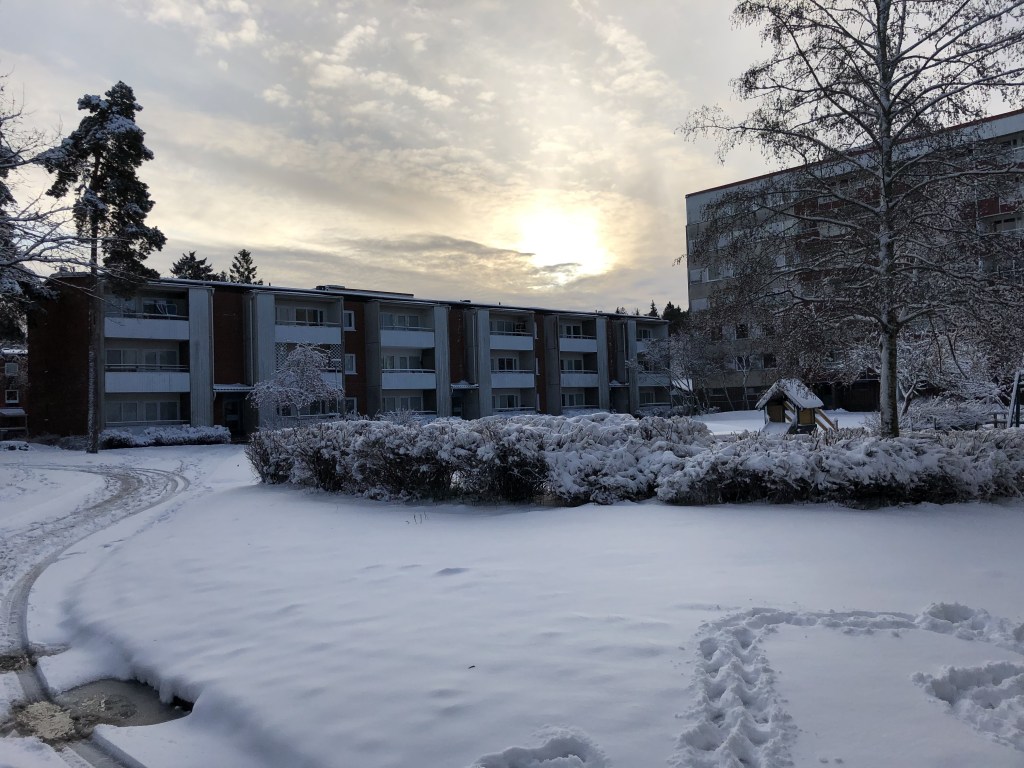
RESIDENTIAL AREA, UPPSALA
STRATEGIC DEVELOPMENT, CITY PLANNING, RESTORATION
2019-2020
SANDELLSANDBERG+HEMBLA
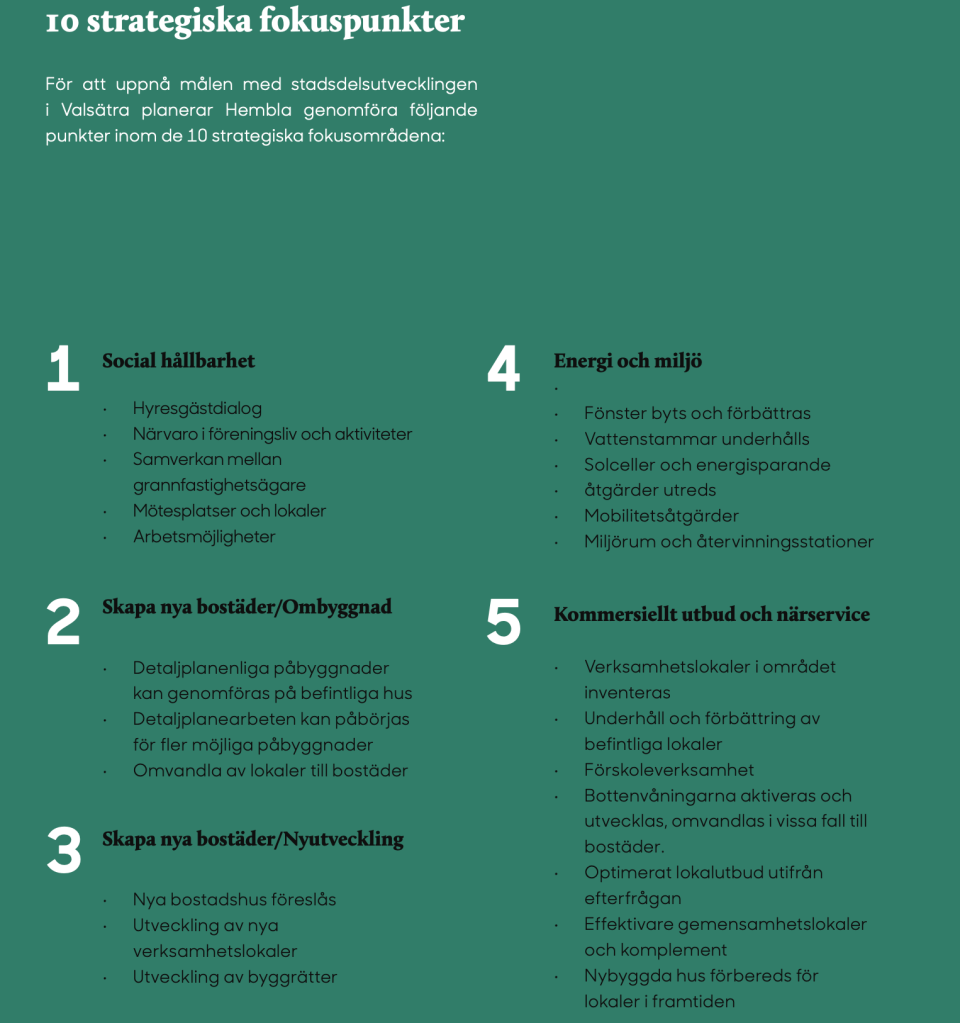
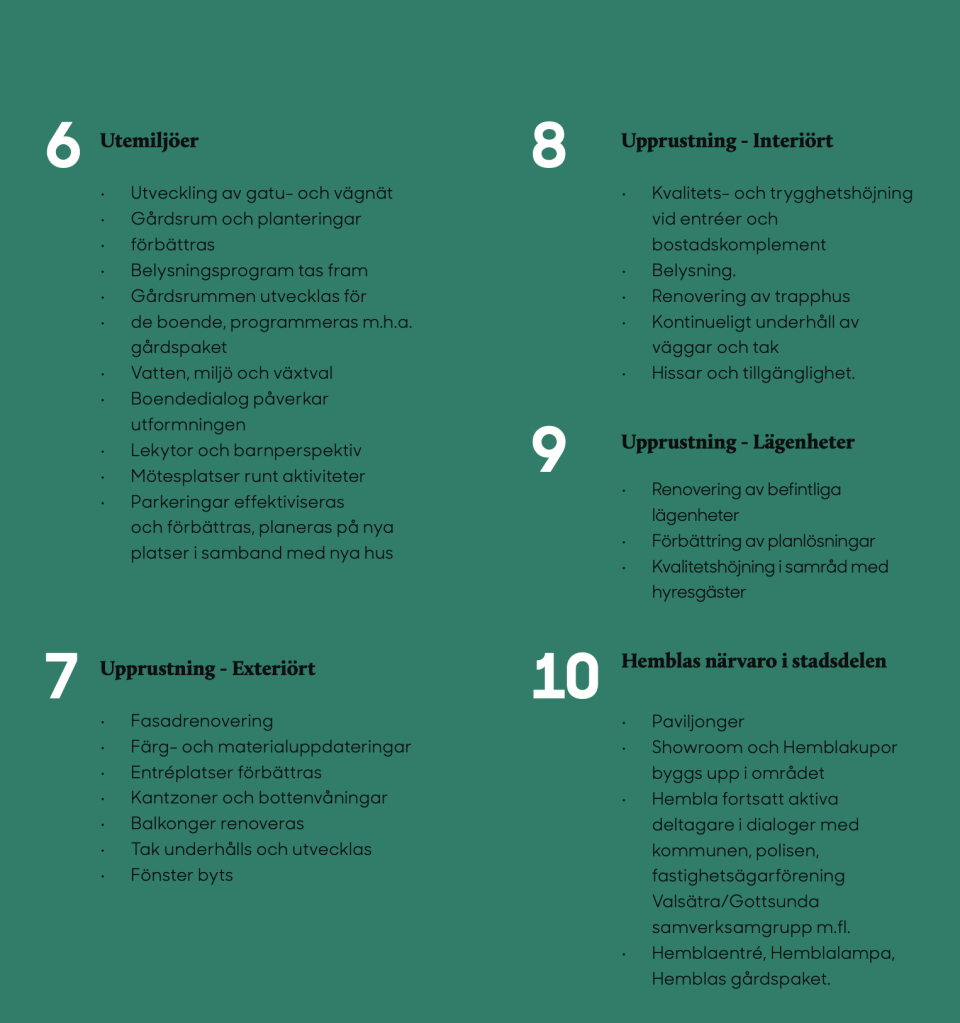
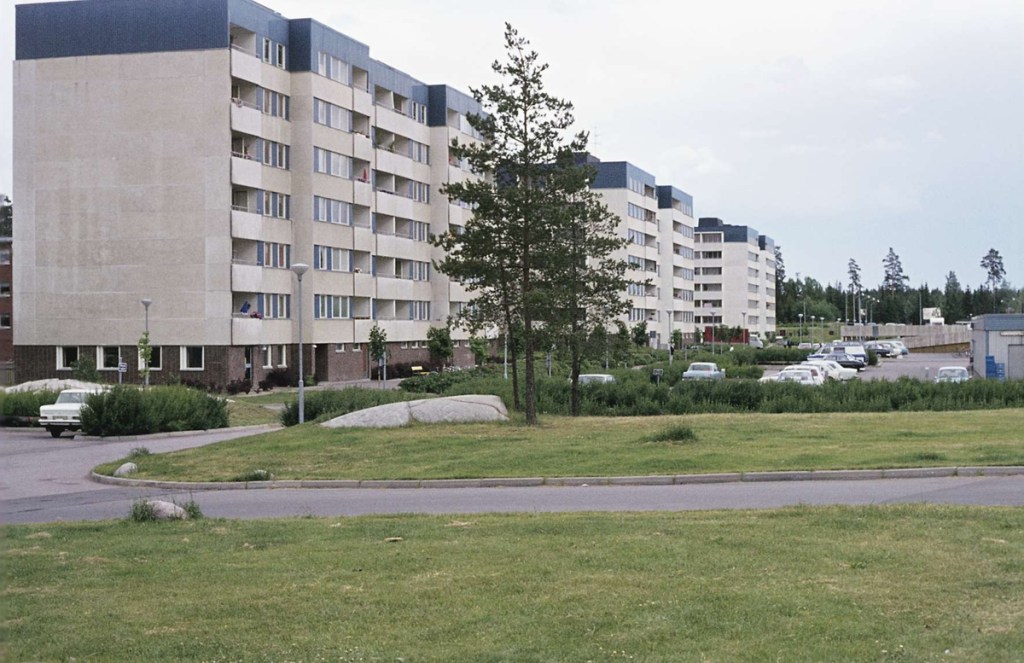
Strategy for development of a residential area from 1970’s in Uppsala. Based on analysis of the area and taking part of interview-responses from residents, the investigation was summarized in a report under 10 sub-headings including description of the current state and a design strategy.
The report proposed developments focusing on the following goals:
- Increase experienced and actual safety+comfort.
- Complete renovations of all buildings and outside spaces with consideration for qualities in the existing architecture and city planning. Take care to preserve the existing rather than replacing, and by doing so point out/manifest the value of the areas architecture.
- Strengthen identity of Valsätra, increase inhabitants ability to influence their area, act to strengthen positive local relations and networks.
- Decrease the area’s contribution to the climate crisis.
- Create conditions for better local services.
- Create conditions for future development in the area in relation to the city’s plans and local history, support transformation and new use of existing spaces – interior and exterior.
During the process of producing the report more concrete investigations were conducted focusing on the potential to:
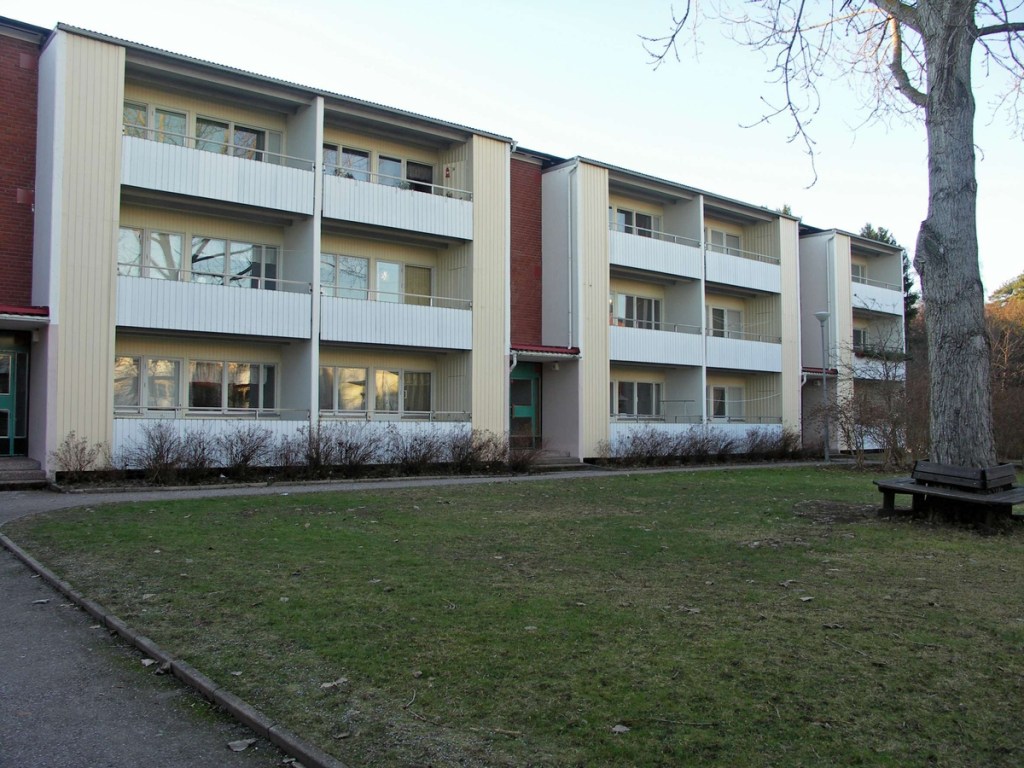
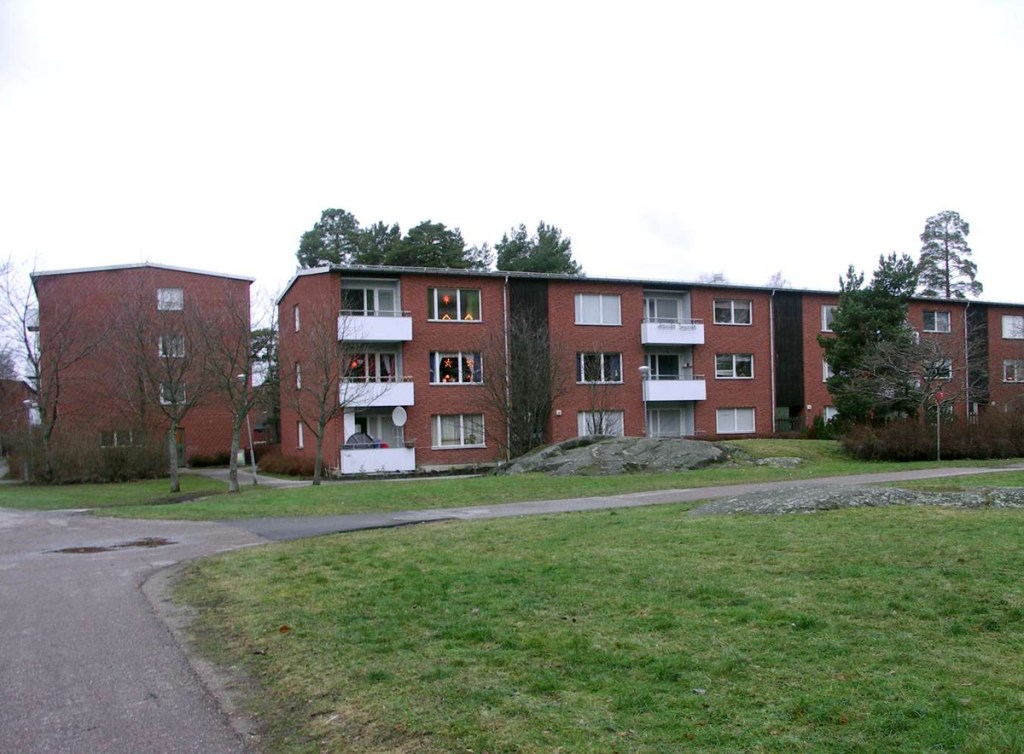
- Take advantage of the recurring typologies in the area.
- Strengthening relationships between functions in buildings and the outside spaces.
- Offer solutions based on working with lighting, patterns of movement, and lines of sight where the architecture has become a stage for social situations that were communicated as being problematic.
- Create a visual language for recognition within the area by utilizing recurring elements in the built environment.
- Activate places: locating functions and activities next to each other that can be used through varying seasons has potential to support social interaction between generations.
Questions/potential development: Complexity and values
What existing values can we support/protect? How do we work with complexity in our proposals? Is it possible to support a shift in perspective/attitude among real estate developers and suggest value-generating measures that also benefit or that at least consider long and short term consequences for inhabitants of their acquisitions?
How can we understand the original intentions behind the area – from the layout of the area to the design of entrances – to work with and potentially strengthen or re-apply these? What has changed in the (social) context they exist in now to influence how they function or could function?
What tools do we as architects use to communicate different values in our proposals? How do we act in response to a situation beyond that which assumptions and stereotypes provide us with to be able to offer more? – Within brand-identities? What process can we promote to be able to listen to a wider range of experiences, needs, hopes, fears, and classify these as information? What actions yield the largest value – for who? What informs in which order efforts should be prioritized?
What is the main intention of the interventions – what lifespan and agency do they have? How can interventions cooperate to achieve many goals? Can developments strengthen the existing – lengthen the lifespan of the already built? How can we work with the local community’s as well as the owner’s perception of this area?
How do we use the design of a strategy to create possibilities for future interventions? While also navigating in the contradictions between “good for the community” and “good for the developer”?
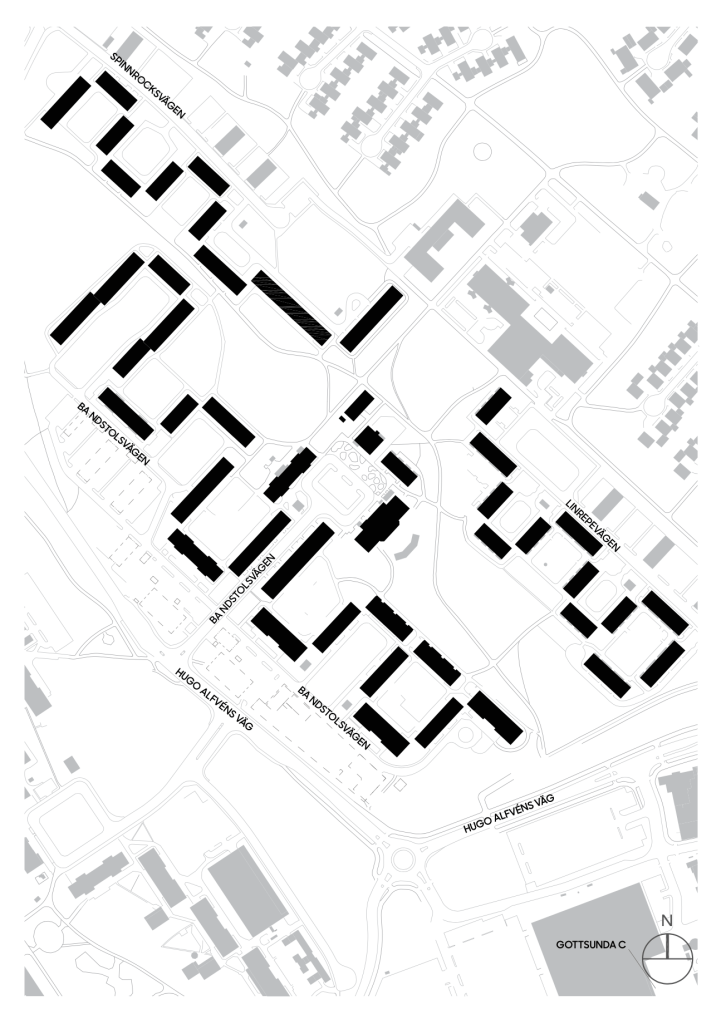
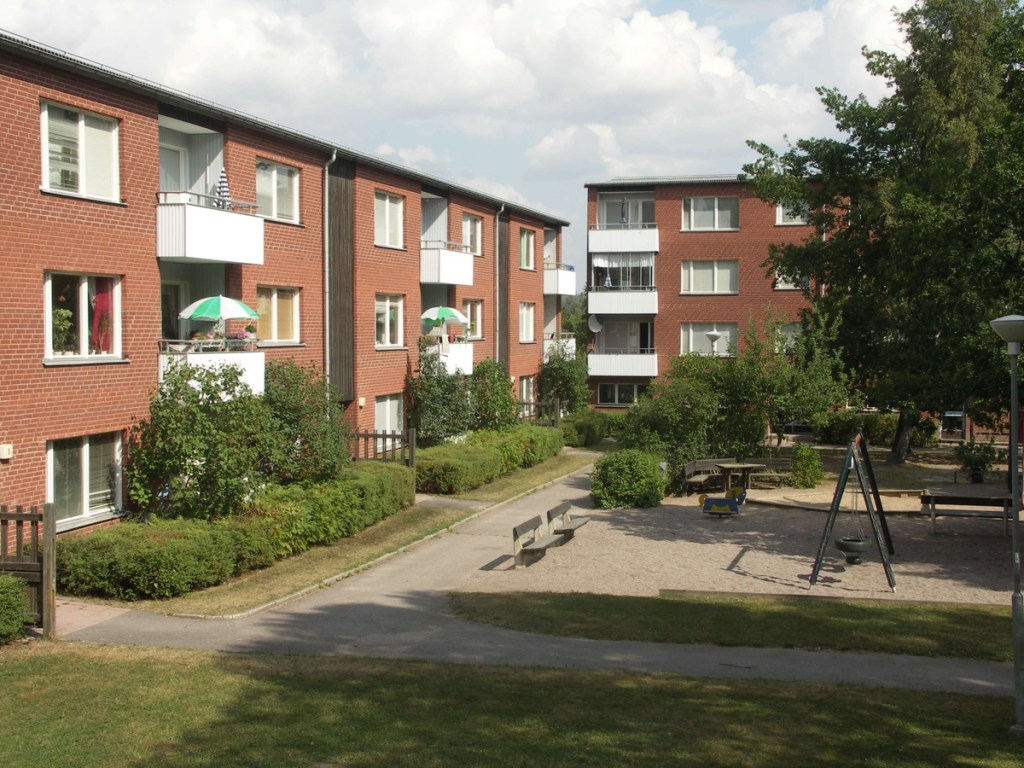
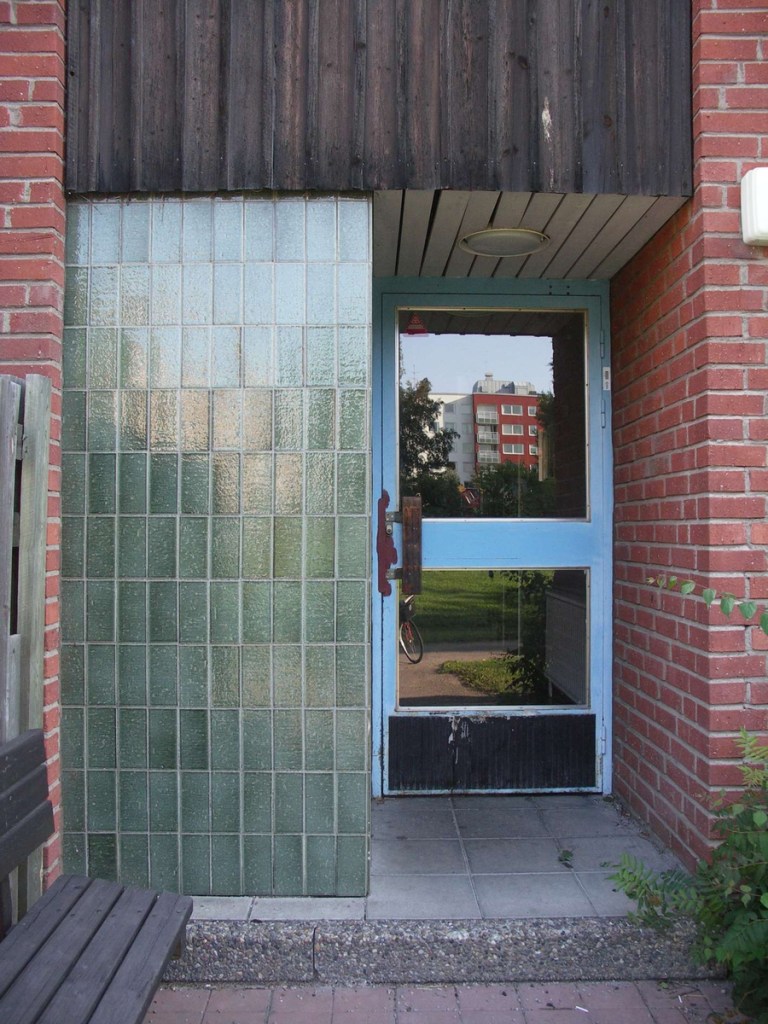
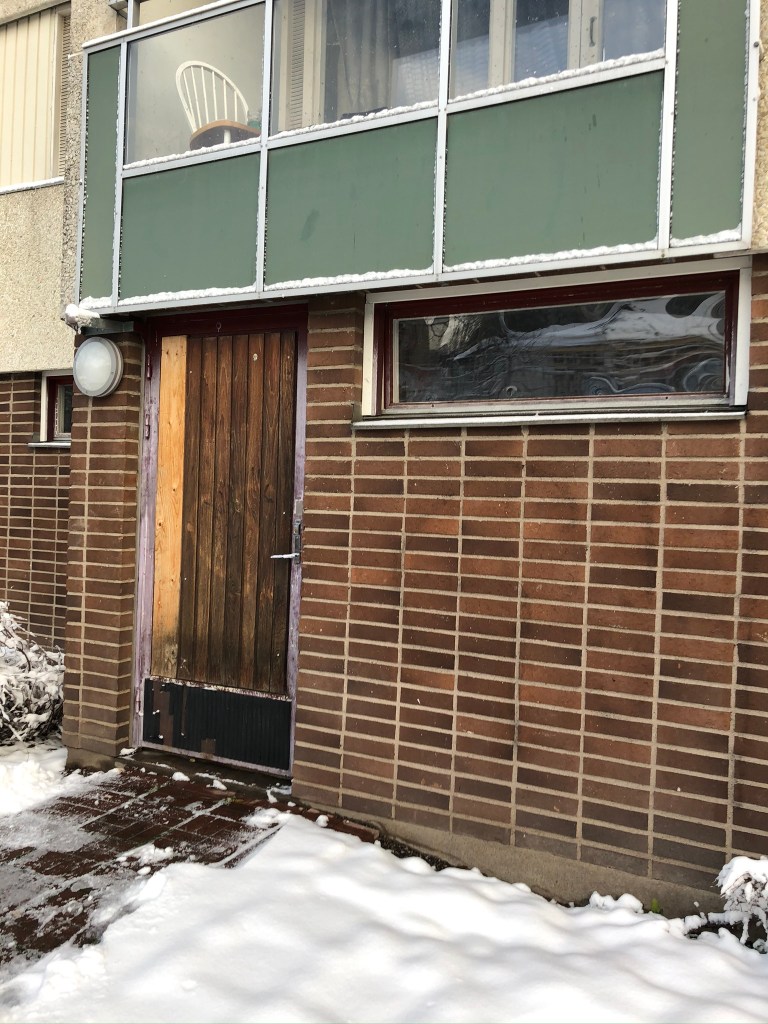
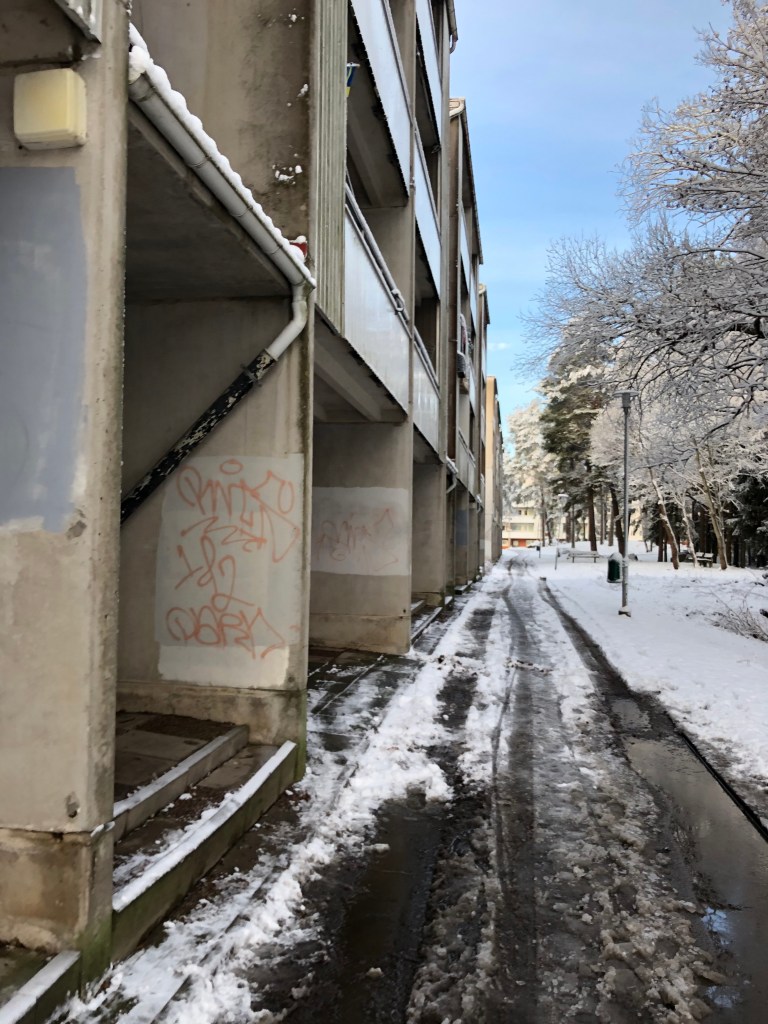

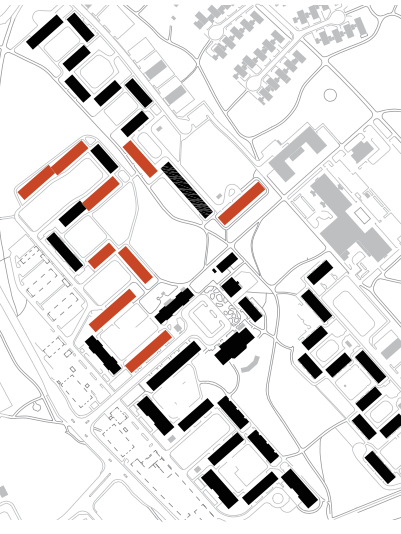
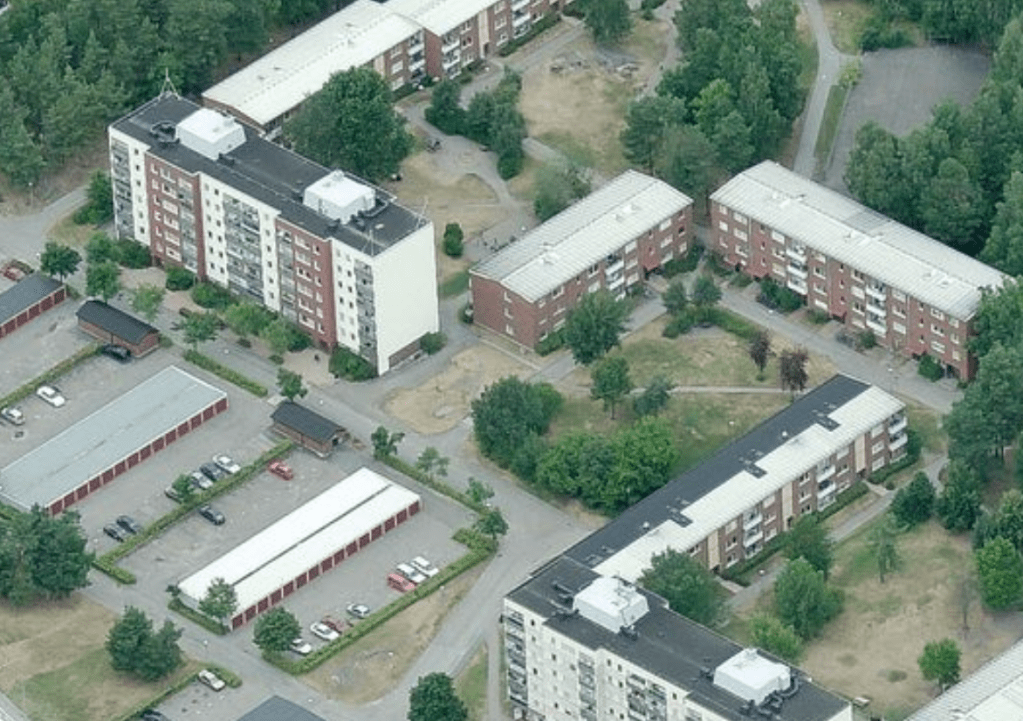

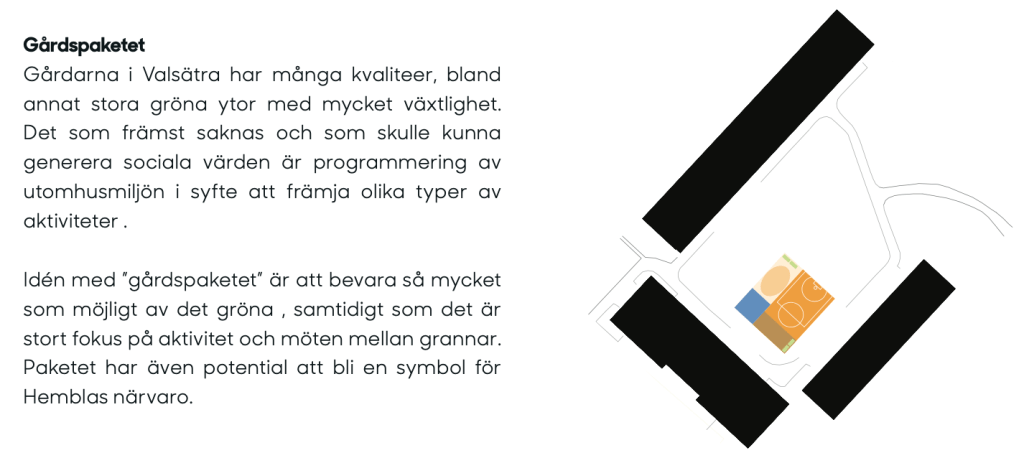
(Above and left) Example of a proposition of new elements that can be applied in varying constellations to reoccurring exterior situations within the existing structure of the neighbourhood. The added elements act in a synergetic manner with the intention to contribute to the goal of activating outside places, create situations for social interaction between generations, and increasing experienced and actual safety – while also using the strategy of recurring visual cues to signal Hembla’s presence in the built environment.
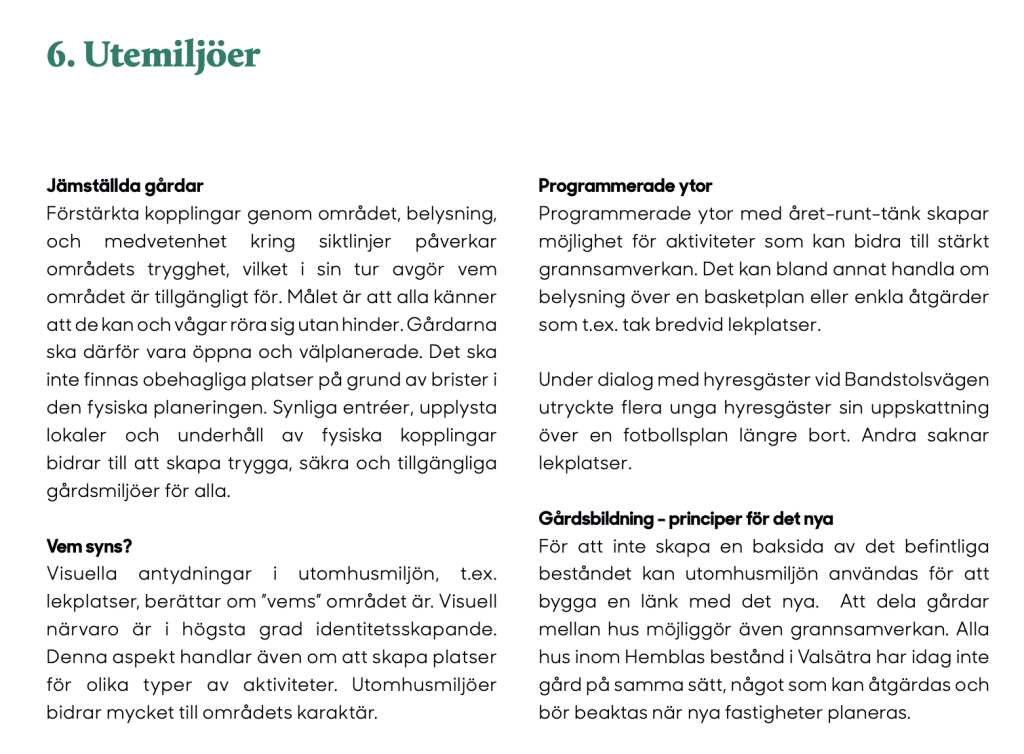
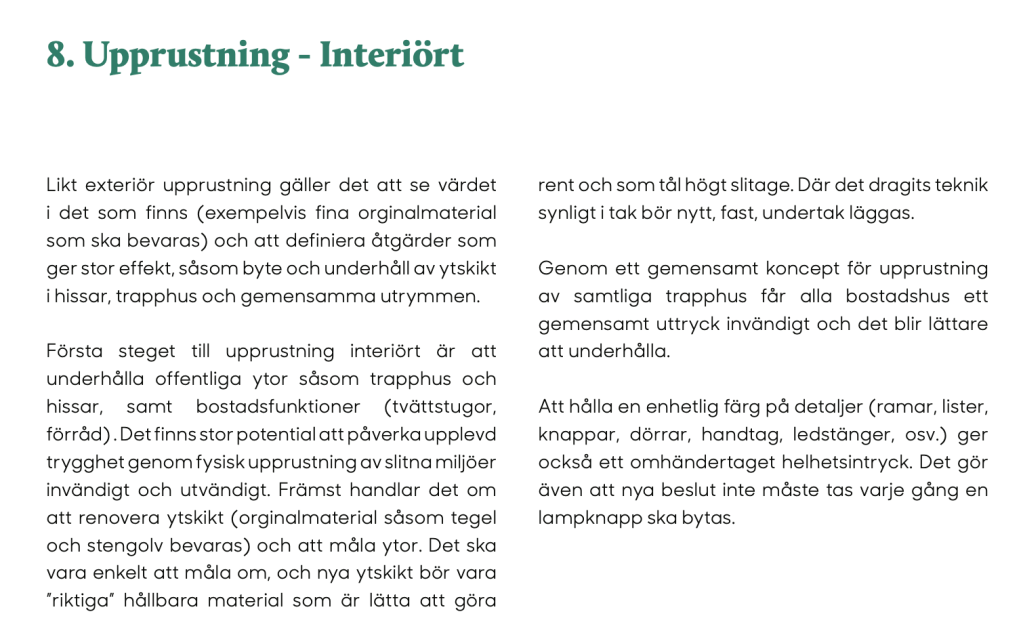
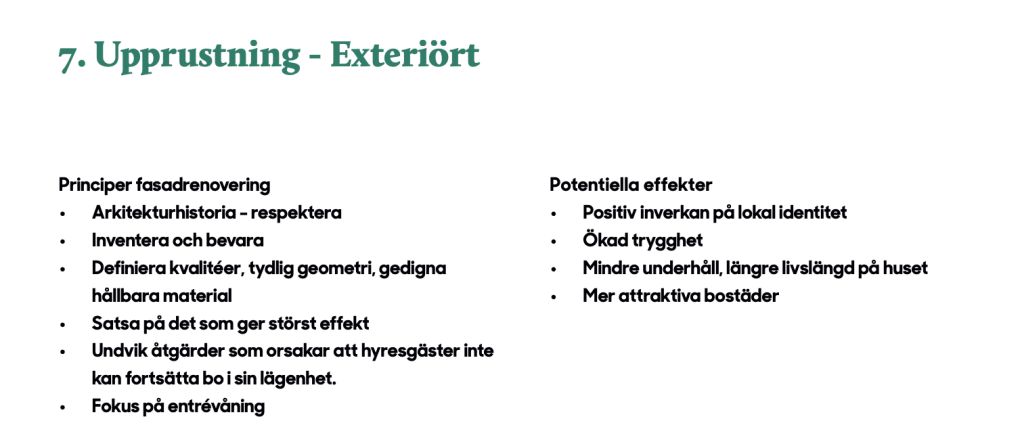
(Below) Example of how the report offered strategies and approaches to different themes that needed to be adressed.
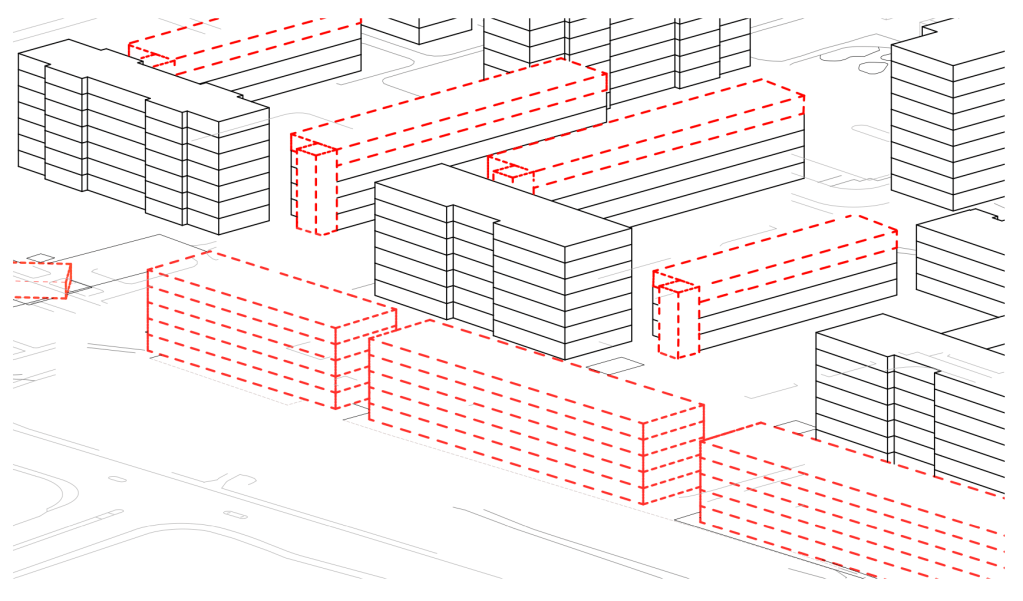
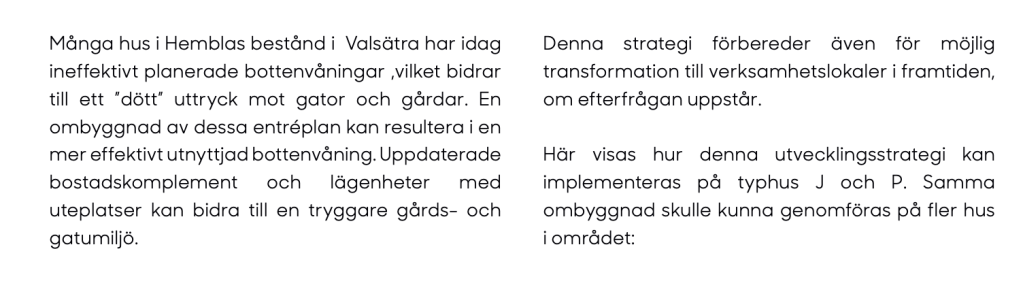
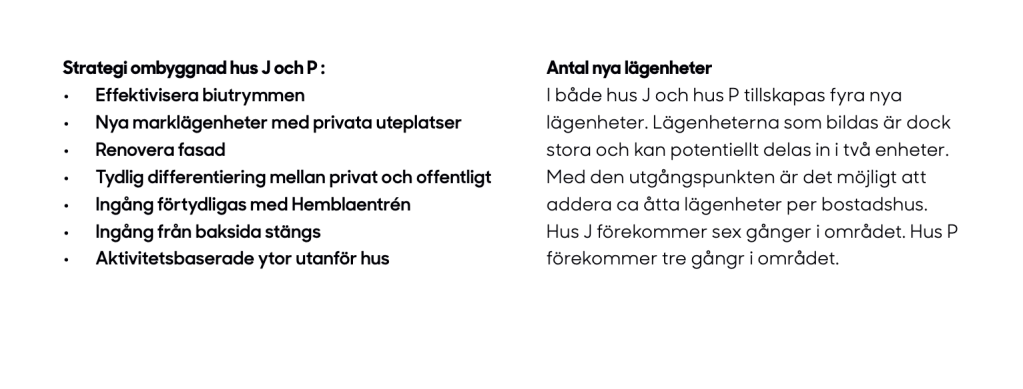
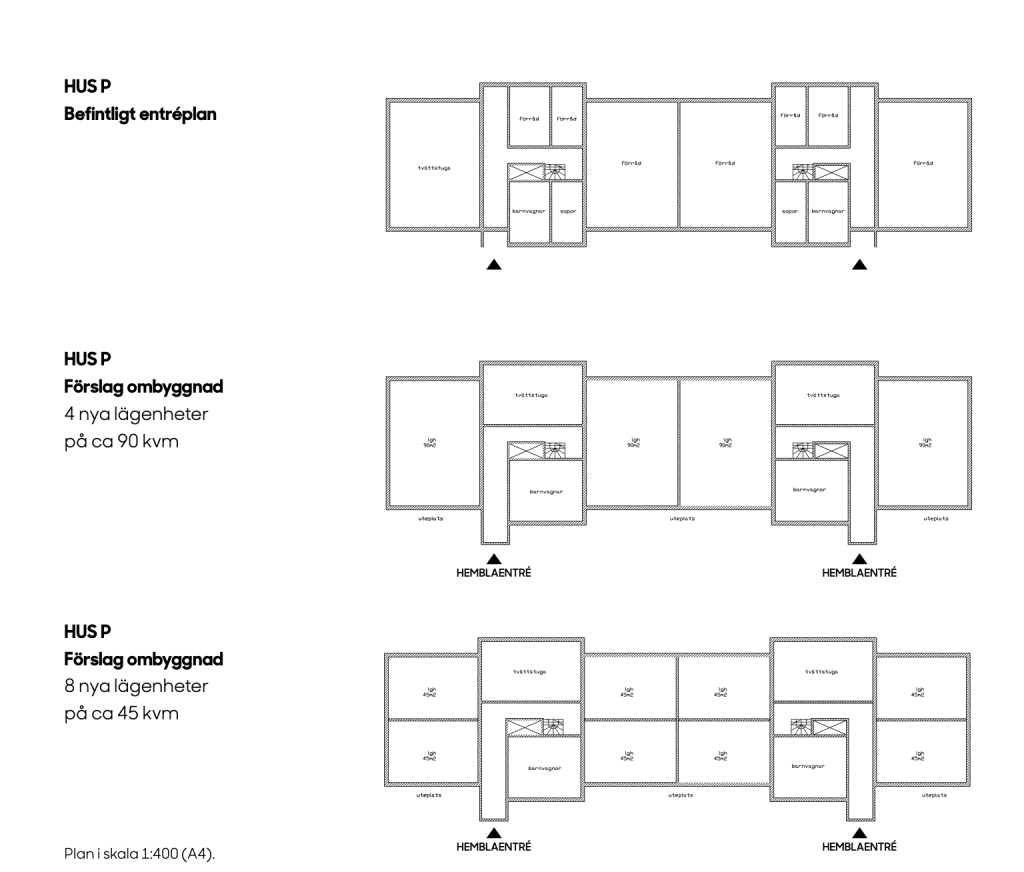
(Below) Example of analysis of potential in reoccurring types of houses to transform the bottom floors, offering space to new functions whose presence may have a positive impact on the experience of the outside area around the houses. The diagrams also show possible application of the new type of entrance that adressed expressed concern for problematic situations that the houses were enabling:

 JENNY ÖVERGAARD